


Socotra
Socotra Land and Sea


This tour is a combination of our one week Socotra tour and the one week Hagghier Mountains of Socotra trip.
Please Note that because there are few flights to Socotra the seats are in high demand and so if you want to join this tour please ensure that you book before 31st July 2027. After that date seats on the flights will probably no longer be available.
Azure seas and pristine white sands surround this rugged island, whose central spine of limestone and granite uplands are home to some truly remarkable plants and endemic birds.
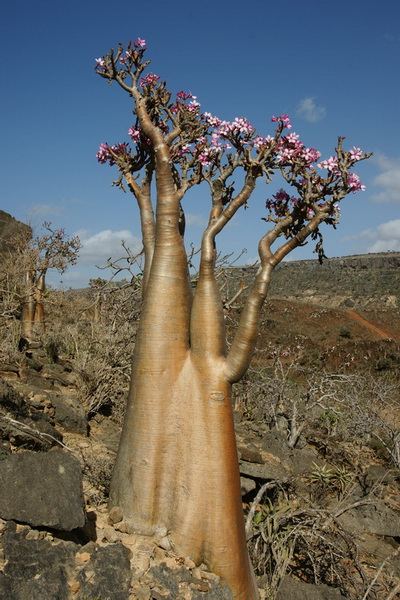
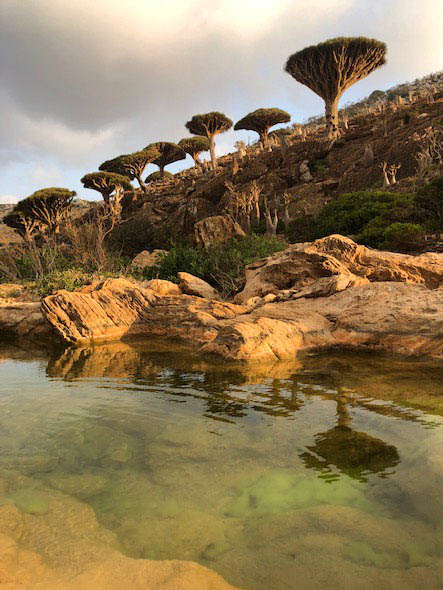
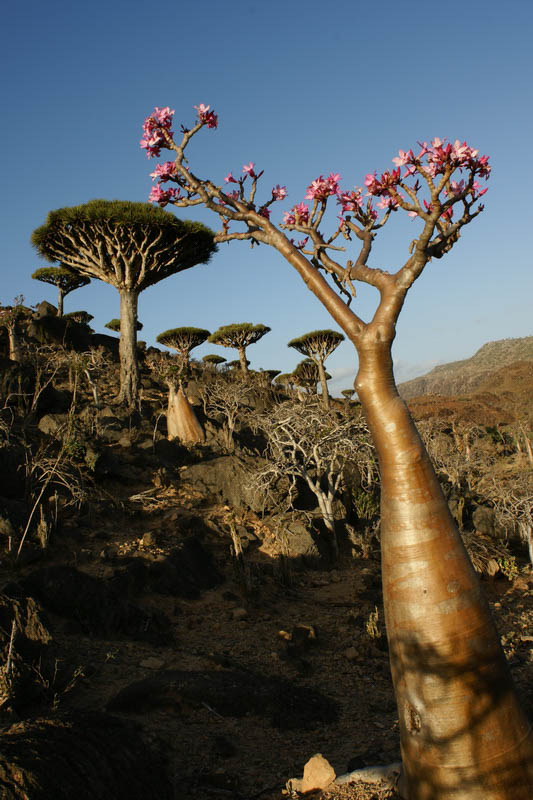
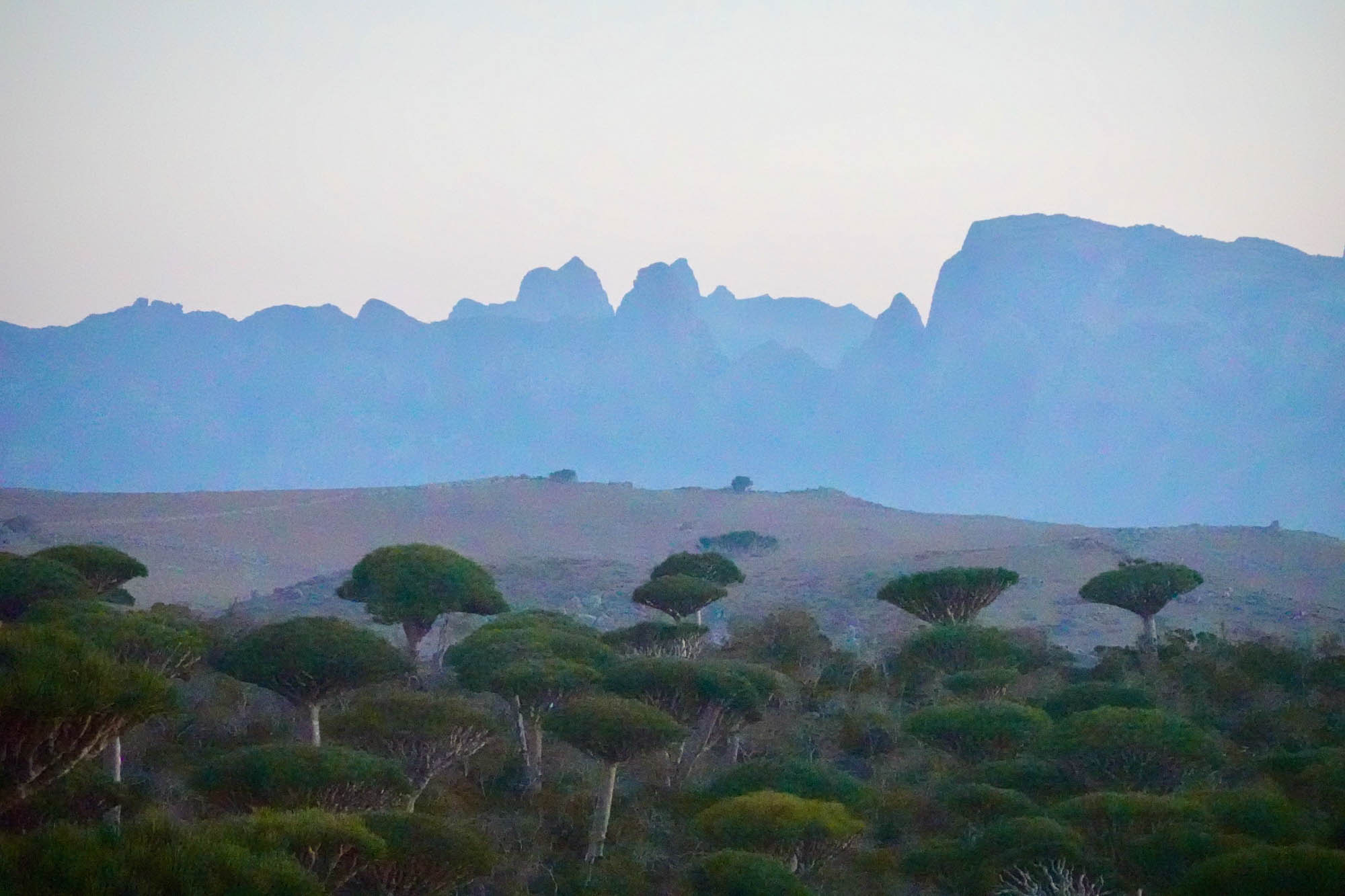
Extremes of climate have encouraged ingenious ways of preserving precious moisture with an abundance of bottle trees, cucumber trees, giant tree-like spurges and the amazing Dorsteinia gigas, a swollen fig tree. We’ll walk among the fabled Frankincense Trees and visit stands of statuesque Dragon Trees Dracaena cinnabari whose unique flattened crowns form pure forests at Rokeb di Firmihin. There are no less than nine species of Frankincense Tree (out of twenty species worldwide) on the main island and we’ll likely see eight of them, including one that is more like a rock than a tree!
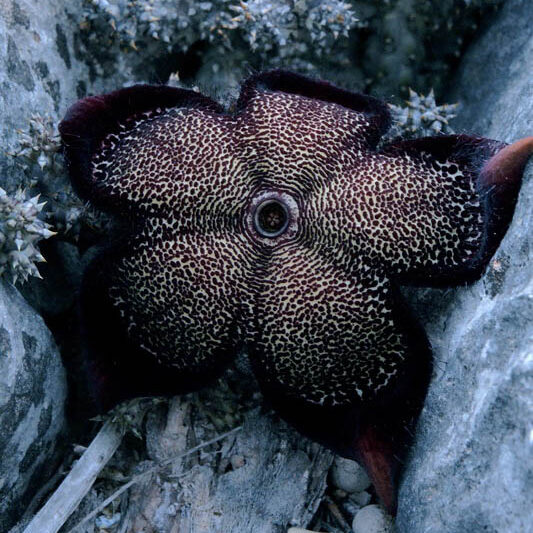
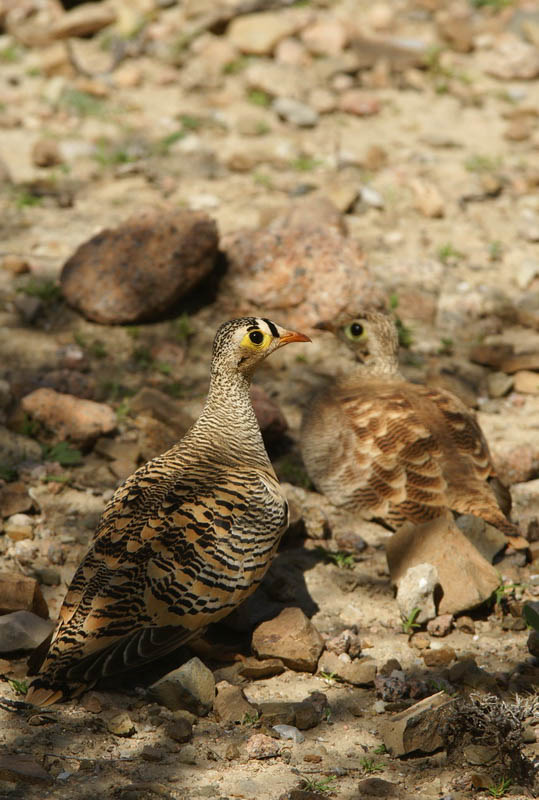
Winter rains encourage fresher growth too, with the rich rusty-red pentagonal blooms of Caralluma socotrana, deep blue Commelina imberbis, bright yellow hibiscuses, brilliant red-flowered Kalanchoe farinacea and maybe the stunning and macabre four-inch wide flowers of Edithcolea grandis. Wedged into crevices on higher peaks are bright pink Begonia socotrana and beside scarce running water grow masses of mauve-blue Exacum affine. Socotra also has a unique and special fauna with a number of endemic bird species. Among dense shrubberies of Jatropha unicostate, Crotons and Euphorbia arbuscula are Socotra Sunbird, Socotra Warbler and Socotra Starling and we’ll have a good chance of finding the wonderful Socotra Chameleon. The highland areas are also home to the pretty Socotra Bunting and down among the date palms we may find diminutive Socotra Scops Owl and Bruce’s Green Pigeon. Golden-winged Grosbeaks sing by the entrance to the huge Hoq Cave, inside which are many superb formations. Nobody has ever reached the end of the cave system!
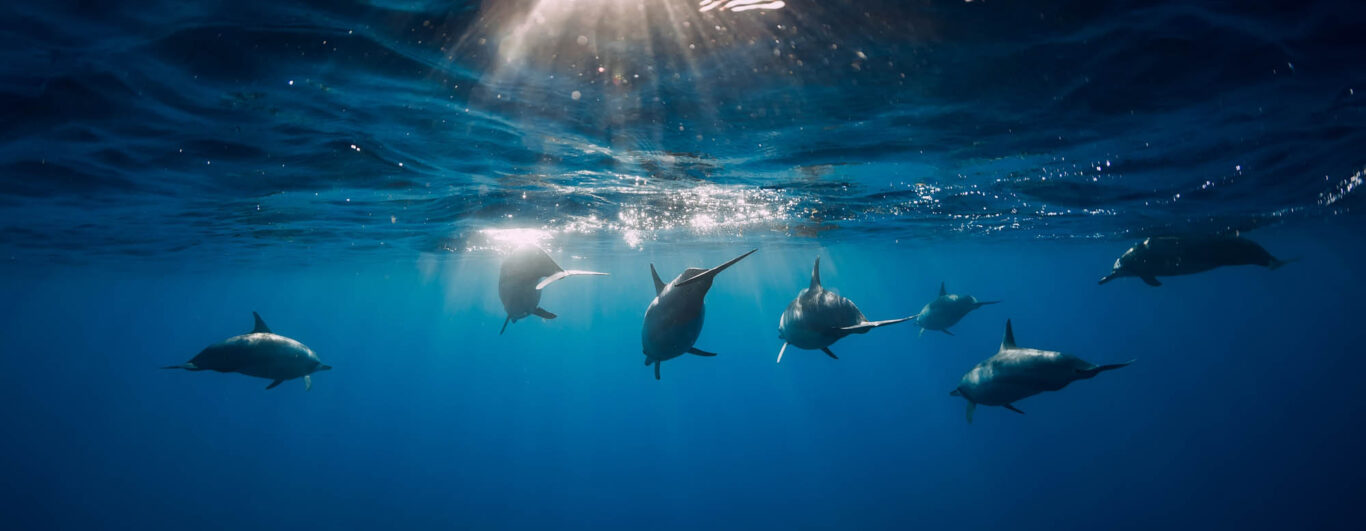
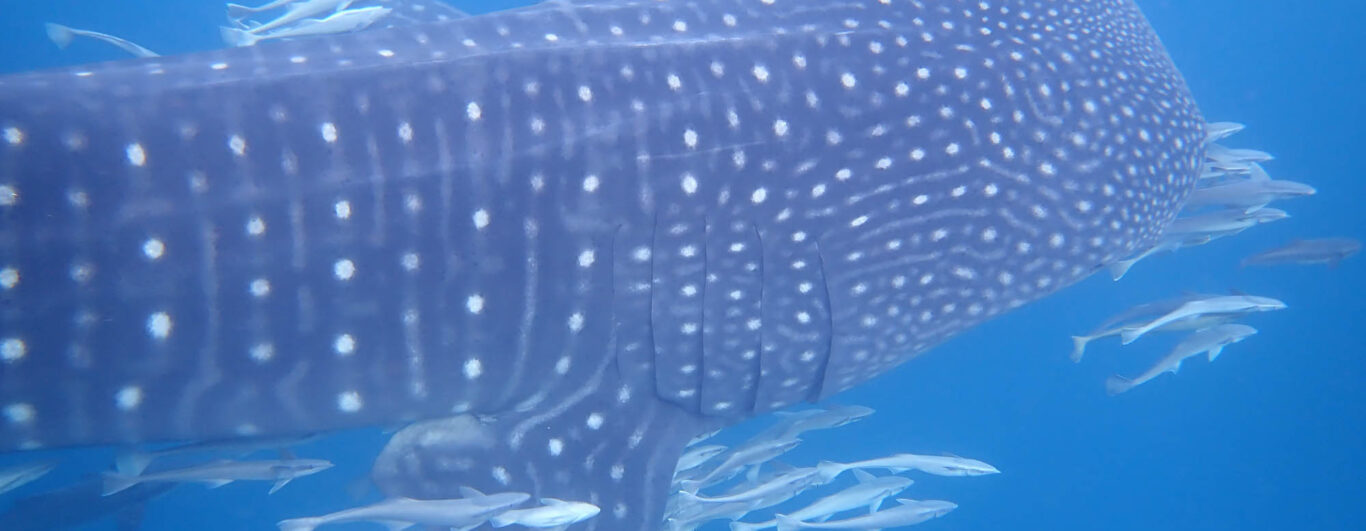
You are never far from the coast on Socotra and indeed it is the sea that provides much of the islanders’ sustenance. Marine life is so rich it seems you merely have to put your hands into the water to pull out dinner! One of our campsites is in a marine nature reserve where the waters are thick with colourful fish – a kaleidoscope of colour greets us as we enter the warm waters. Swarms of Indian Triggerfish, Sohail Surgeonfish and Silver Batfish crowd around coral heads where pairs of exquisite Solander’s Toby’s defy us to approach their castle. There’s a dozen species of Butterflyfish and impressive Trapeze and Regal Angelfishes. Diversity is amazing – Honeycomb Moray, Cube Boxfish, Scribbled Filefish, and all sorts of colourful Wrasse and Parrotfish! Green Turtles cruise past and overhead Great Crested Terns are abundant. Red-billed Tropicbirds breed on the cliffs close to Shoab where we’ll spend time amongst cavorting Spinner Dolphins. We might see Whale Sharks here too. Masked Boobies, Brown Boobies and Socotra Cormorants are amongst a good range of seabirds.
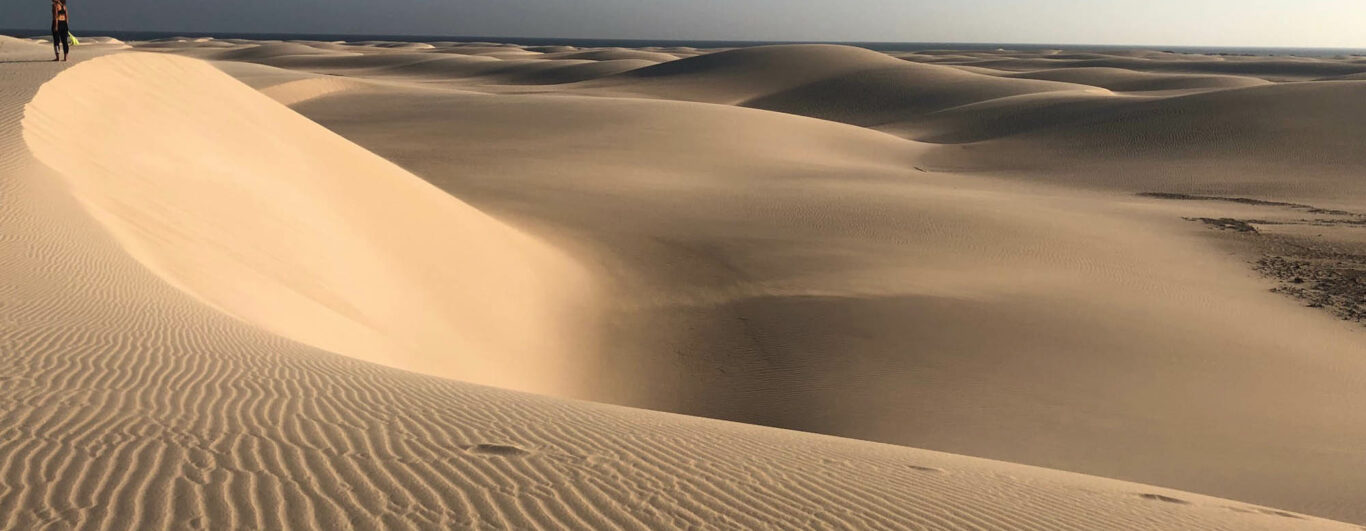
We’ll spend plenty of time enjoying (and photographing!) an array of stunning, untouched landscapes, incredible sunrises over the dragon trees, towering sand dunes as well as swimming in deep cool highland pools and experiencing the fine hospitality of the exotic Soqotri people. And we’ll be able to stay in the most beautiful and remarkable of these landscapes as our local team will daily move our lovely large Arabian-style tents and have them ready for us when we arrive!
We’ll spend plenty of time enjoying (and photographing!) an array of stunning, untouched landscapes, incredible sunrises over the dragon trees, towering sand dunes as well as swimming in deep cool highland pools and experiencing the fine hospitality of the exotic Soqotri people. And we’ll be able to stay in the most beautiful and remarkable of these landscapes as our local team will daily move our lovely large Arabian-style tents and have them ready for us when we arrive!
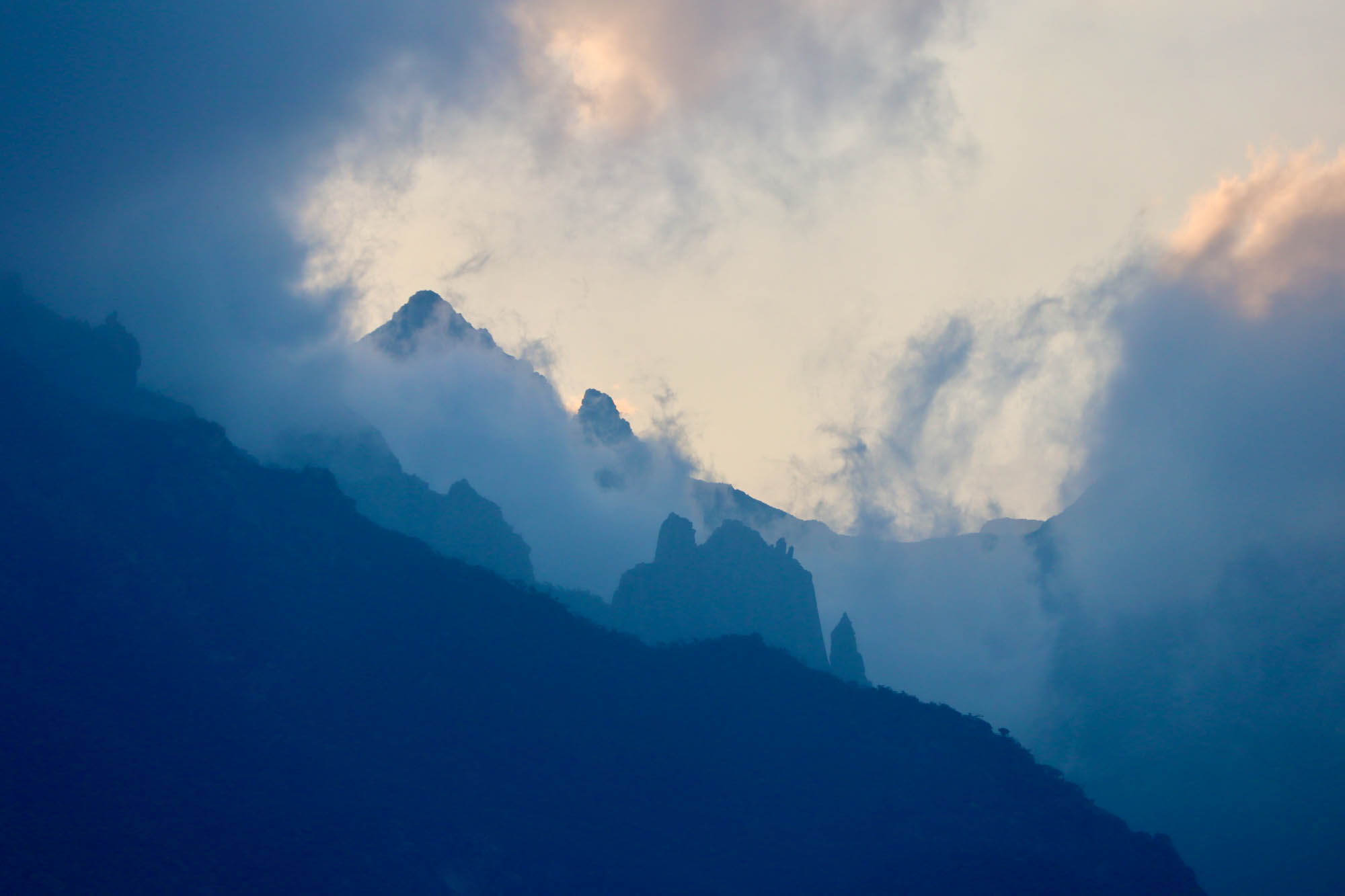
Stunning granite domes and pinnacles rise to an altitude of 1500m above the coastal limestone plateaux. During the two short monsoon seasons clouds rising from the warm Indian Ocean bring moisture to these highlands, creating conditions that support an isolated remnant of biodiverse Afromontane Forest, alternating with small green goat pastures and rocky ledges, all loaded with endemic shrubs such as aromatic Helichrysums, yellow flowered Pulicarias and the showy Hypericum balfourii.
The forest patches, rich in ferns otherwise only growing in continental Afromontane Forest, are usually capped by single trees and groups of the iconic Socotran Dragon Tree Dracaena cinnabari. Mists swirl around the great pinnacles, creating mystic plays of light and shadow, as we explore evergreen broad-leaved forest with Euphorbia socotrana, Chapmannia tinireana, Myrsine africana, Olea capensis, Pittosporum viridiflorum, Sideroxylon fimbriatum, Spiniluma discolor, and the endemic white-flowered Dirachma socotrana. In the understory there are several species of endemic Hibiscus shrubs with large, deep yellow flowers, unique to Socotra‘s high country. As we contemplate the marvelous views down into deep gorges to the blue sea far below we’ll find endemic genera such as the acanthoid Chorisochora, the umbels Nirarathamnos and Rughidia, the succulents Duvaliandra and Socotrella, and the delicate Haya, all contributing to uniqueness of this fantastic biome.
The rich plant live is home to endemic birds as the pretty Socotran Bunting, the yellow and green Bruce’s Green Pigeon, Socotra Golden-winged Grosbeak, Socotra Sunbird, Socotra Warbler and the Socotran Scop Owl. We’ll find the Socotra Chameleon and a number of endemic geckos.
We’ll descend the south side of the Hagghier Mountains to Rokeb di Firmihin where we’ll walk among the fabled stands of statuesque Dragon Trees Dracaena cinnabari whose unique flattened crowns form pure forests here. Crossing the dry interior Zahr basin we’ll explore the rarely visited Quataryah limestone ridge in the Southwest of the Island. This dry barren ridge and plateau rises 700m above the turquoise blue ocean. This is a different world of dry, rocky mountains. In the higher, mist affected areas many new species have been discovered in the last decade. There are endemic shrubs and dramatically shaped succulents such as the only recently discovered columnar Euphorbia marie-cladiae and the low growing, extremely rare Frankincense Tree, Boswellia hesperia.
Dates and Prices
15th February - 29th February 2028 (15 days)
Flora, birds, Marine Life and Wild Landscapes
Ian Green , Peter Steiger , Stefano Doglio
The minimum is 5 and the maximum is 12.Ian Green for the first week and Peter Steiger for the second week. For both weeks Stefano Doglio will be the second leader. One leader up to 8, two leaders up to the maximum of 15.
Return flights from Abu Dhabi to Socotra. All transport, meals, accommodation and gratuities in Socotra. Yemen visa. Services of your leaders. Please note: items of a personal nature including insurance, are not included. Flower and bird checklists are available.
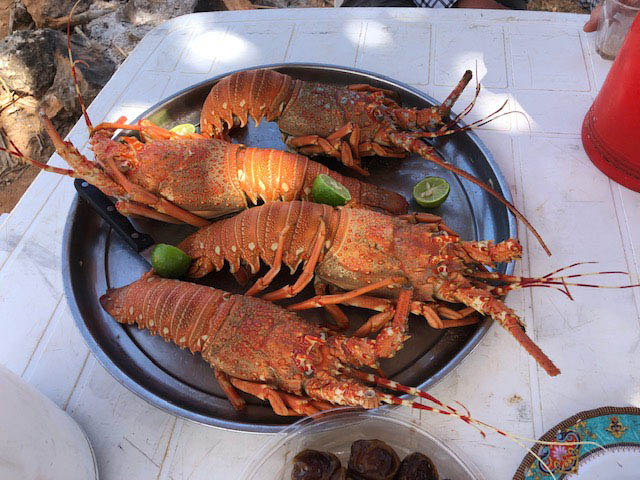
Camping may not be everyone’s cup of tea but this is really the way to experience the amazing landscapes and wildlife of Socotra. We use large Arabian-style tents. They are 4m diameter and you can stand in them throughout – we accommodate a maximum of two people per tent. Each tent comes with mattresses and pillows. If you prefer a single occupancy tents there are little tents available too. We move camps each night and each camp is in a stunning location so you are always there at the best time for both wildlife viewing and photography. The camps also come with tables and chairs and in some places with shelters too for meeting and eating under. Our cooks serve good island staples with various baked and fried fish, chicken, rice, eggs and delicious fresh flatbreads. There’ll be more than one chance to feast on the island’s delicious lobsters! On several of the nights the camps are set by permanent toilet and shower facilities but on three of the nights there are no such facilities…
Generally only a few miles a day, but with some steep trails along rocky and sometimes narrow paths. The terrain is always uneven and rocky with areas of sharp limestone and tough (but not spiny!) shrubberies.
During the second week there is no road heading up the steep slopes of the Hagghier Mountains. To enter this fantastic and unique world, hardly visited by any tourist, we make a slow trek based on camel support and camping with enough time to enjoy this spectacular place, its biodiversity, and its small villages. The experienced crew with our local guide will move our tents and luggage from one campsite to the next, preparing delicious meals with local food, allowing you to walk around with a light daypack. Once we reached the highland above 1000m up a steep but botanically especially rich northern flank, we will be covering a distance of only three to six kilometers per day with a few hundred meters of up and down. The ground is generally rocky and rough.
We use the direct return flights from Abu Dhabi to Socotra. These depart very early morning and arrive back into Abu Dhabi in the morning a week later.
Mostly clear and sunny and then it gets hot quickly though temperatures rarely exceed 30°C at this season. Thick mist can descend on the highlands swiftly and envelop the area, greatly reducing visibility, though we’ll mostly be below this. During the second week we’ll be in the high mountains which are considerably cooler and mist can take temperatures right down to 10°C. Occasional rain.
Each half of this tour can be joined as a wonderful stand-alone tour. See
Socotra – Dragon Trees and Frankincense and
Socotra – The Hagghier Mountains
for further details
Contact us to check if there is availability for the number of places you require. Click on the ‘Book this Tour’ button on this page to be taken to the online booking form or contact us and we will send one to you which you can complete and send back to us. You will receive confirmation of your place, and then a detailed information pack will be dispatched to you about twelve weeks before departure. This will contain up-to-date health information.


Dragon Trees & Frankincense and Socotra's Marine Paradise
15th Feb - 29th Feb 2028 (15 days)