


Tulips in the Tien Shan
Sardinia

The Tien Shan, The Celestial Mountains & the Dzhungarian Gate
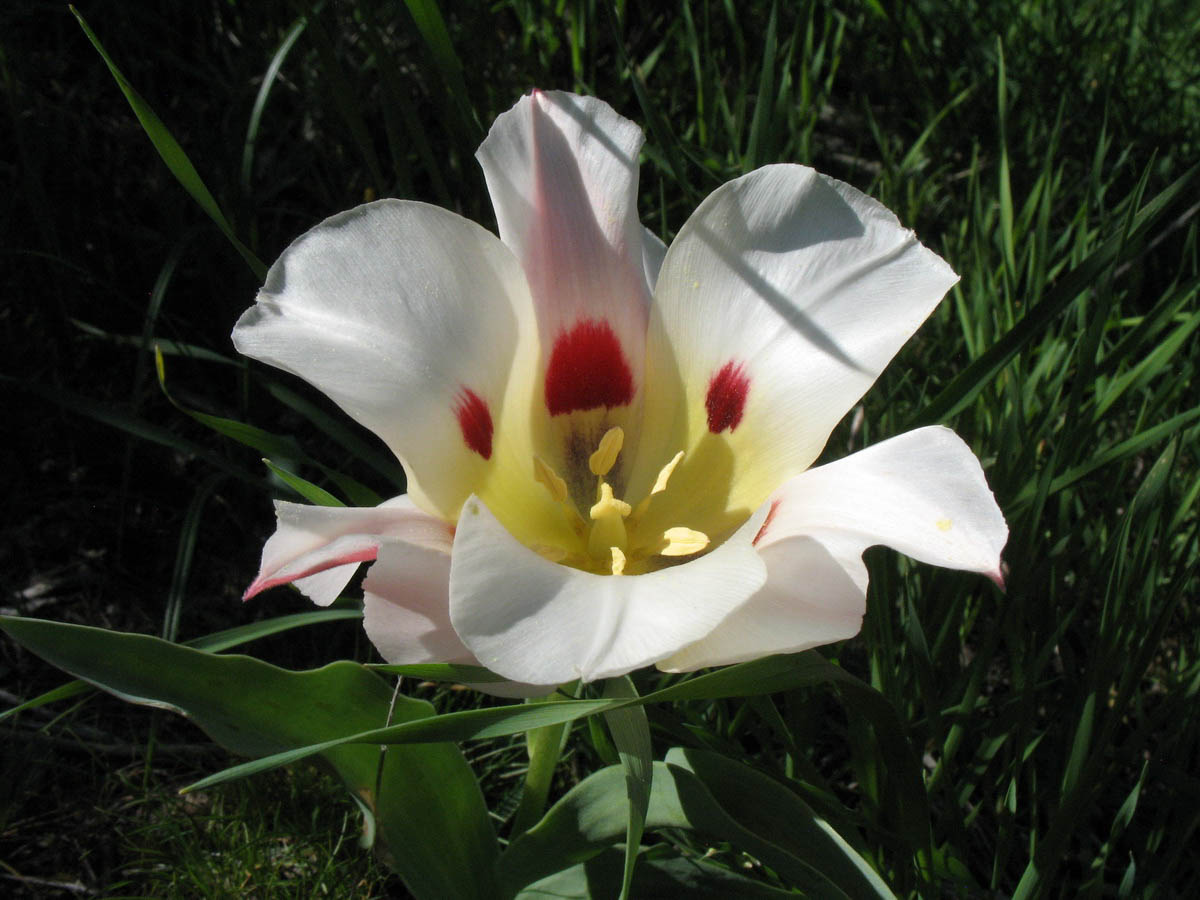
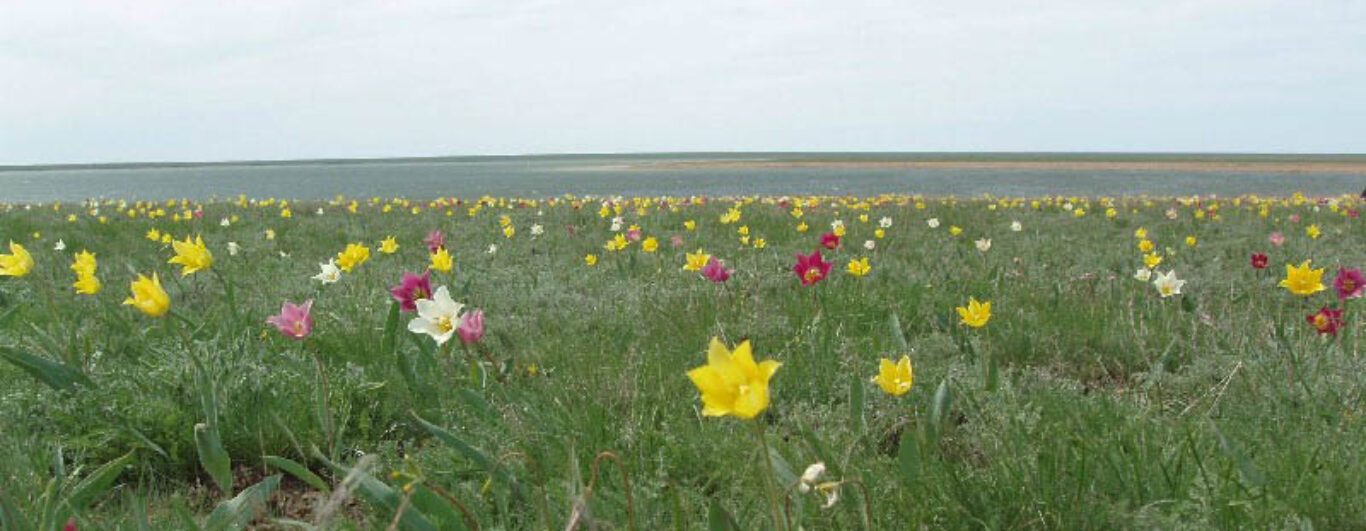
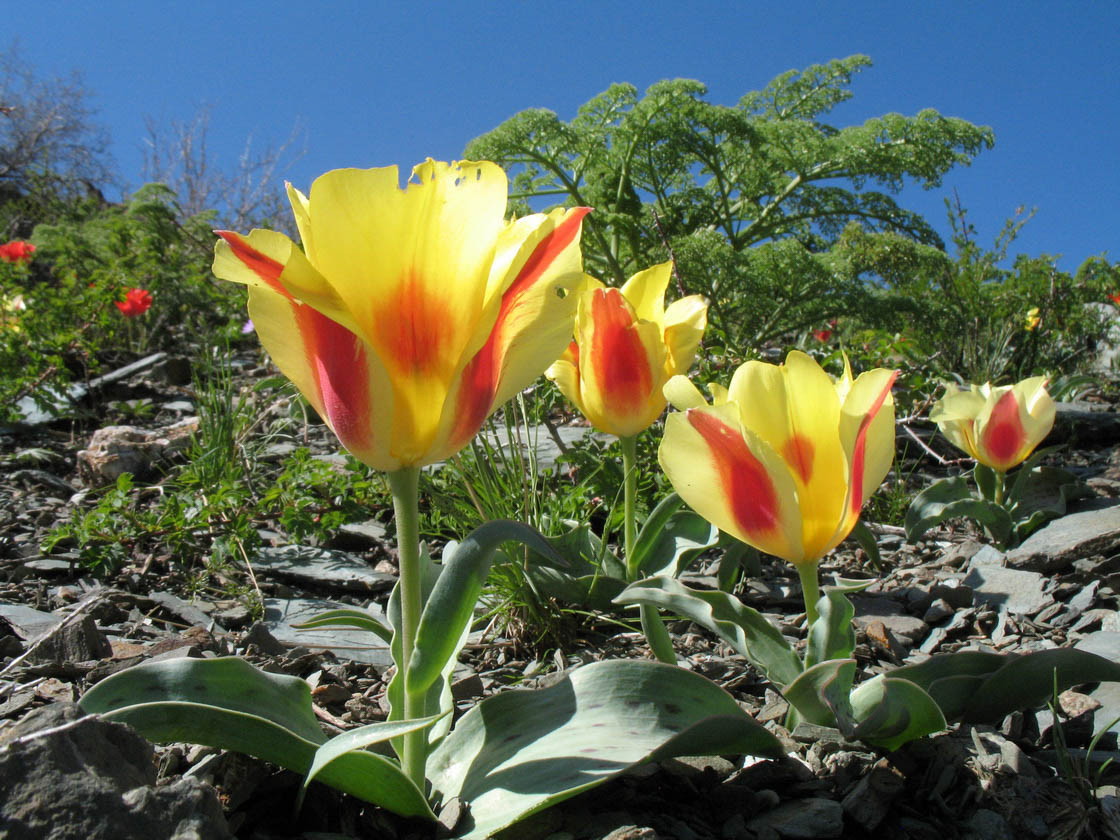
A truly remarkable display of colourful tulips carpet the mountains and valleys of Southern Kazakhstan in spring. Chief among them are the magnificent goblets of Greig’s Tulip which come in an unforgettable pageant of reds, oranges and yellows. Beautiful water-lily flowers of Tulipa kaufmanniana adorn the lower slopes of the Mountains of Heaven like so many jewels, while swathes of multi-coloured Tulipa ostrowskiana and Tulipa kolpakowskiana shine in the crystal clear air of these Central Asian Mountains.

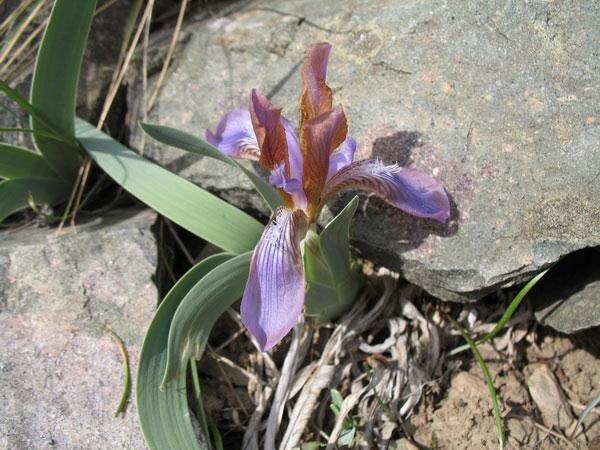
Stunning red Tulipa albertii and luminous yellow and orange Tulipa lehmanniana are among twenty species of Tulip that include rarities such as Tulipa buhseana, Tulipa tetraphylla and the lovely bicoloured Tulipa zenaidae. Most recently we’ve added the beautiful Tulipa lemmersii, only described two years ago, a yellow beauty known as yet only from west‑facing rocks in a single canyon. But these are just part of a floral extravaganza. Fritillary-like Korolkovia severzovii and Rhinopetalum stenantherum, with their strange coloured bells, the latter a stunning pink, mix with bright yellow Anemones and a colourful variety of elegant Corydalis species. By patches of snow are the white stars of Crocus alatavicus and along with half a dozen species of Iris is the many-hued Iridodictyum kolpakovskianum. We’ll walk in the famous Aksu-Dzhabagly reserve where we’ll see Siberian Ibex and the globally endangered Arkhar on flowery slopes. Sometimes we encounter Isabelline Brown Bears as they select the most succulent greenery in rich turf by patches of snow. The Sugaty Plateau in the Ketmen Mountains is home to Desert Warbler and elegant Pallas’s Sandgrouse, and Susliks will whistle at us as we enjoy a fine display of bright yellow Tulipa iliensis and lovely Iris scariosa. Bird migration will be in full swing. Flocks of up to a thousand Demoiselle Cranes will be a fantastic sight. Resident Blue Whistling Thrushes and Brown Dippers are joined by migrant Blue-headed Redstarts and Black-throated Thrushes feeding in rocky valleys ablaze with Juno subdecolorata, Iris ruthenica, Paeonia hybrida and the milky wands of Eremurus lactiflorus.

For the second part of the our Central Asian bulb odyssey we move to Kyrgyzia.
Over ninety per cent of the country lies above the top of the UK’s highest mountain! Independent after the collapse of Soviet rule in Central Asia, this stunningly beautiful country never actually existed before the Soviet Union, rather it was invented (as an autonomous region) in the 1920s by Stalin. Perhaps not surprising then that few of us know much about this land of alpine lakes, fast-flowing rivers, rolling steppelands, conifer forests and rare walnut forests that lie between the arms of the giant snow-capped peaks of the Celestial Mountains.
Bishkek will provide us with a comfortable base to explore the bulb-rich Alexander Range and the Besh-Kungei Hills. We’ll also explore Kastek, Kemin and Kungei Mountains and we’ll visit a number of gorges including the famed Archaly Gorge, beautiful Oruu-Sai, and, on the last day of the tour, the Belogorka Gorge. During the middle part of the tour we’ll travel to the flower-filled Suusamyr Valley, explore the Fergana and Talas Mountains, and visit several passes including the high Otmyok.


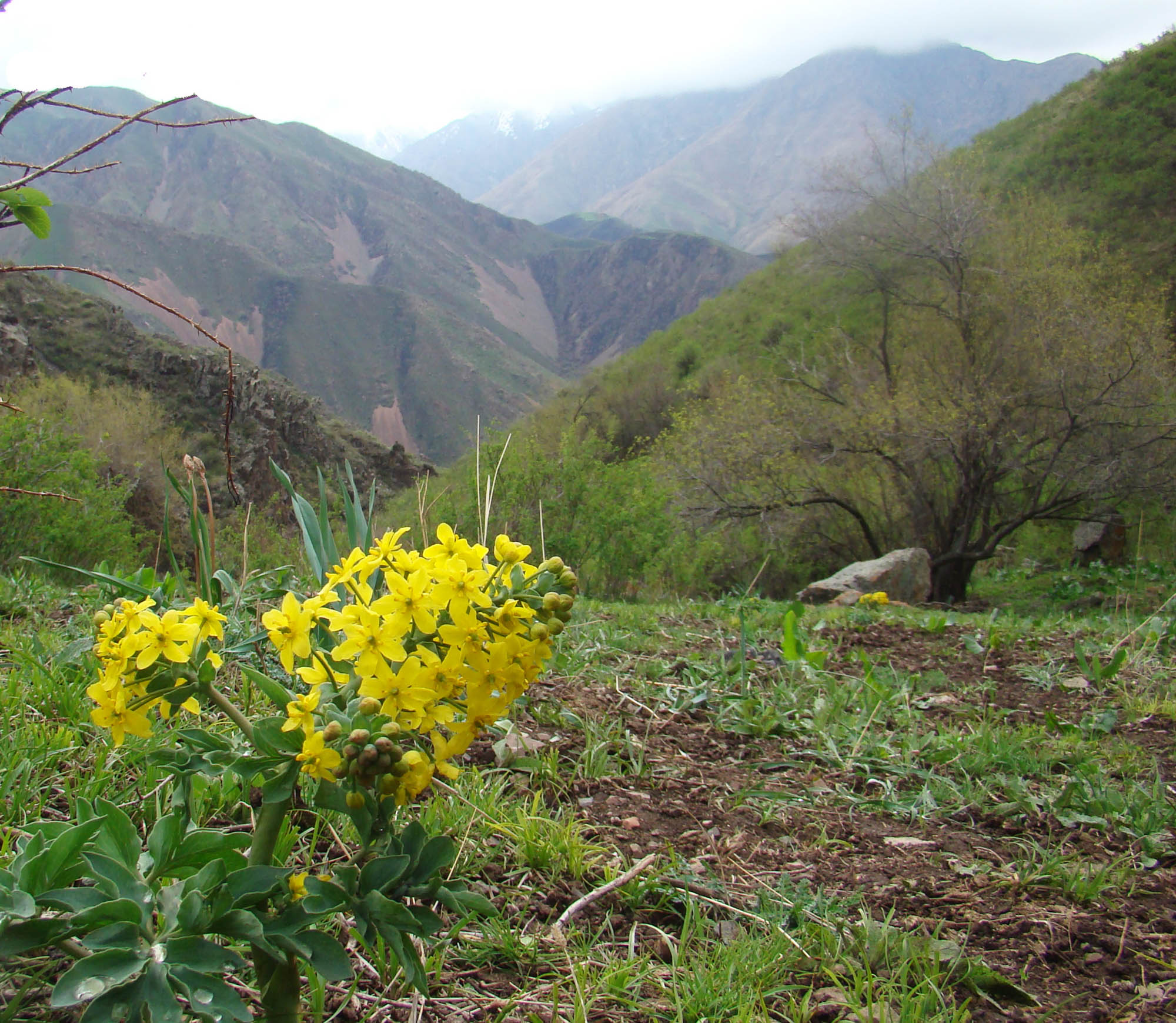
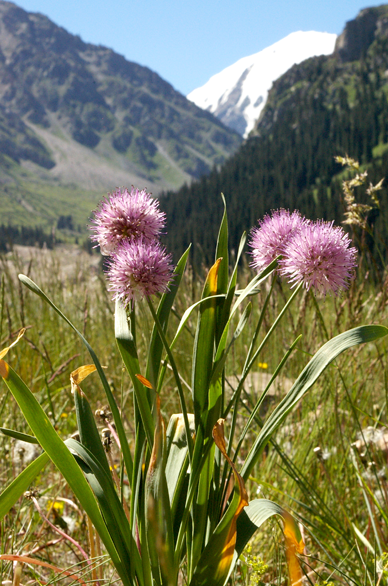
These areas are home to some very fine flowers. Tulips will be a major focus. Alongside the classical scarlet goblets of Tulipa greigii are swathes of yellow and white Tulipa tarda. There’s newly described Tulipa lazkovii, variable Tulipa ostrowskiana, with its red, yellow or any combination in between blooms, and if we are not too late the shiny white stars of Tulipa jacquesii. Egge-yolk yellow Tulipa kolpakowskiana are a delight. Still there’s more. We’ll see Tulipa dasystemon, Tulipa tetraphylla, pure yellow Tulipa talassica, and yellow and red Tulipa zenaidae. Fritillaria ferganensis scrambles through shrubberies of bright yellow Rosa ecae. Flowering spires of the rather genteel (for a fox-tail lily) Eremurus zoae dot hillsides where we will also find Pedicularis albertii and Allium caricifolium as well as bright yellow Glaucium fimbrilligerum. Irises are varied and we’ll see species such as Iris loczyi, Iris albertii, and the gorgeous little pale blue Iridodictyum kolpakowskianum whose falls are dipped in purple ink. Red-pink Paeonia intermedia will impress and on the same hillsides are the tall brownish wands of Eremurus cristatus and the fabulous tall Eremurus robustus. Nearby higher ground yields pink and white Corydalis ledebouriana, Gagea liotardii, and little Colchicum kesselringii. Chorispora bungeana is that classic alpine, a little mound of large pink flowers that almost completely covers the foliage. Its cousin Chorispora sibirica is yellow. Also here are luminous yellow Adonis chrysocyathus, Glaucium elegans, Viola altaica, Colchicum luteum and Juno orchioides. Under the pretty pink blooms of the small tree Louiseania ulmifolia we’ll find Allium karataviense, Allium dodecadontum and yet another foxtail lily, Eremurus lactiflorus. The variety seems never-ending, and the landscapes one fabulous vista are another.
Moving back into Kazakhstan we explore the eastern Kazakh border with China, a closed book for a century or so, and even with the opening up of Kazakhstan the lack of roads and even towns of any size has kept this region remote from outsiders.

For two millennia the Dzhungarian Gate was a major line of communication between western and eastern Asia and through it passed some notable armies as well as trade. A flat valley floor is hemmed in by precipitous mountains on both flanks so completely that any other route through them is incomprehensible. The adjacent peaks reach a heady 14,500 feet! This tour leaves the eastern fringes of the Tien Shan mountains and passes through the Taukum and Akdala Deserts to the Dzhungarian Alatau. From there we pass Alakol Lake before entering the species-rich Tarbagatai Mountains. Then we head north across the Zaissan Depression before reaching the more Siberian habitats of the Kalbinsky Hills on the western fringes of the Altai. Simple hotels provide accommodation throughout. There will be much travelling but always through wonderful vast central Asian landscapes, varying from endless rolling montane steppes to high mountain peaks, and from bird-rich wetlands to sandy deserts. You’ll experience the largely uninhabited wildernesses of the mountains and explore what are, in terms of fauna and flora, very little-known regions. Indeed you’ll soon note that several of the plant names bear the name of your guide, as Vladimir has discovered new tulips and fritillarias when guiding groups through this region in recent years.
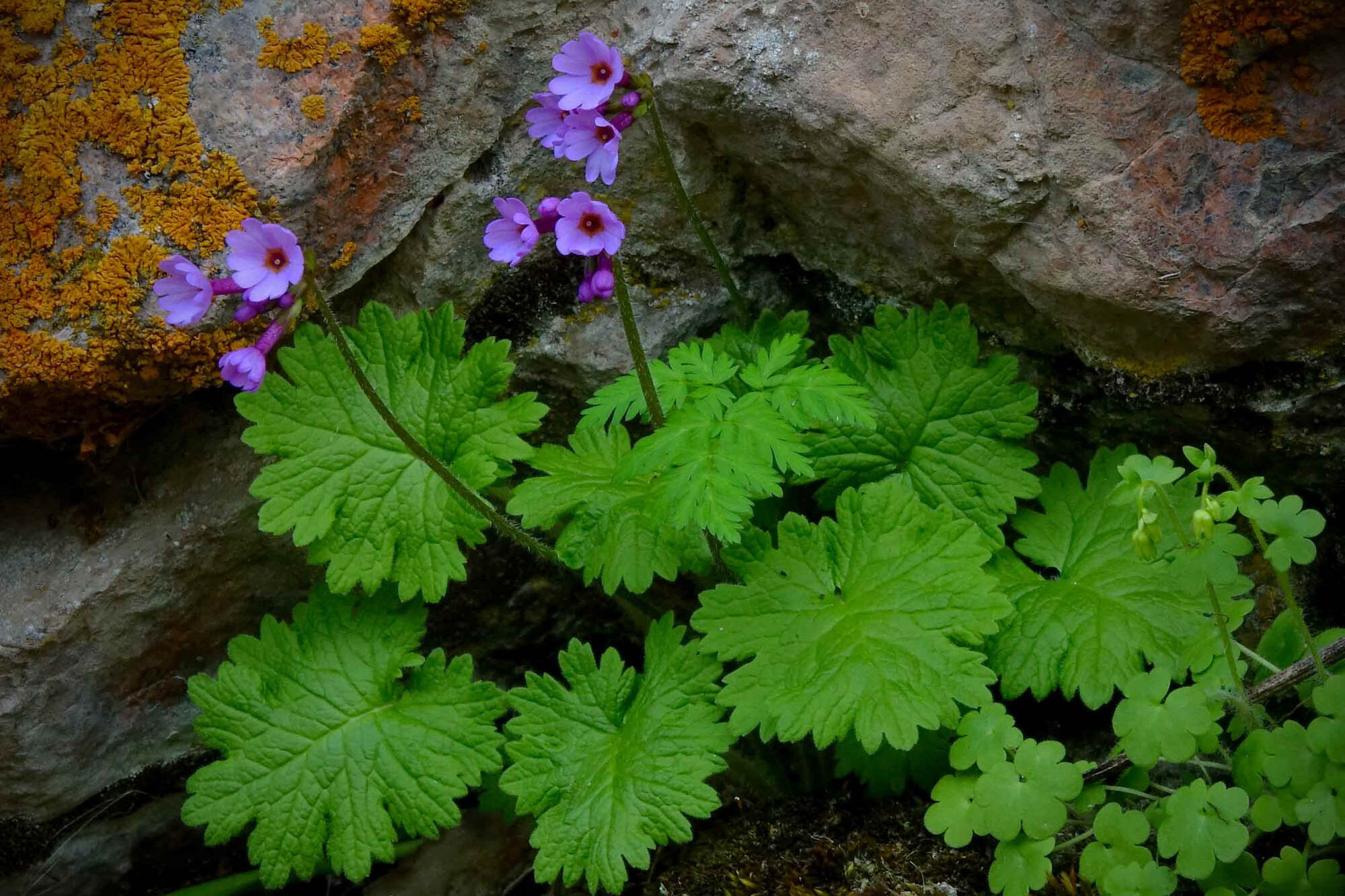
We’ll have many wonderful botanical encounters in these mountains, such as drifts of fabulous Erythronium sibiricum that decorate the Marble Pass in fetching shades of yellow and pink and swathes of golden Tulipa altaica on the high Tarbagati Mountains. There’s pale Fritillaria pallidiflora, equally pale Fritillaria pallida (actually now thought to be a cream-coloured form of meleagris), newly-minted Fritillaria kolbintsevii, and an eye-catching ivory form of Fritillaria verticillata. There are shows of pink Primula kaufmanniana and yellow Primula macrocalyx, steel-blue forms of Clematis integrifolia, the local columbine Aquilegia vitalii, and the pretty shrub Caragana camilli-schneideri. By late snow patches are beautiful forms of Corydalis schanginii and the butter-yellow Gymnospermium altaicum. Most unusual are the pretty lilac tomato-relative Physochlaina physaloides and a sub-shrubby cress, Dendroarabis fruticulosa. Being Central Asia we might expect more Tulips and sure enough we’ll soon find yellow Tulipa heteropetala, Tulipa corynestemon, pale rose Tulipa patens, and Vladimir’s own tulip, Tulipa kolbintsevii. Middle altitude rocky valleys will yield Allium inderiensis, Fritillaria meleagroides, Pedicularis dasystachys and stands of bright pink Paeonia intermedia. Even low-lying desert sands have a fascinating flora with lots of Astragalus species, beautiful yellow Chorispora sibirica and pink and white Pseudosedum lievenii blooming amongst the curious ‘mini trees’ of Anabasis truncata. There’s a whole
bunch of onions in the shape of elegant Allium tulipifolium, Allium subscapum, Allium tschulaktavicum the spherical pink or white heads of Allium caricifolium. And even more tulips – the rather unassuming Tulipa annae, and the elegant golden goblets of Tulipa lehmanniana.
NB Trip reports for these magnificent longer tours are too unwieldy to download from the website, let alone read in one go, so trip reports are listed for each section of the tour. The Tien Shan to the Altai is a new tour so no trip report is available yet for that section.
Dates and Prices
8th April - 16th May 2027 (39 days)
* doesn't apply if you're willing to share and a room-mate can be arranged
Spring Bulbs and other Flowers. Also Mammals, Birds and Mountain Wilderness
Kurt Vickery , Oron Peri , Vladimir Kolbintsev , Sergei Zenin
On the first Kazakhstan part one leader, Vladimir Kolbintsev for a group of up to 6, aided by Oron Peri up to a maximum group size of 15. In Kyrgyzia both Kurt and Sergei are with the group up to the maximum group size of 8. Vladimir returns to lead the final part to the Altai with a maximum group size of 9.
All flights. Transport, accommodation and all meals in Kazakhstan & Kyrgyzia. Services of the leaders. Please note: alcoholic drinks, tips, and items of a personal nature including travel insurance, are not included. Please note that for UK citizens a visa is not needed for this tour.
Flower, bird and mammal checklists are available.
We start in Almaty where we’ve two nights at the start (really one and a half nights) in the very comfortable modern Hotel Kazzhol. At Merke we have a single night at a rather basic hotel before moving to Taraz for a three night stay in the good quality Dzhambyl Hotel. Next we’ve four nights at a little guesthouse close by the entrance to the national park in Dzhabagly. This place has a very friendly atmosphere, comfortable rooms, and we can guarantee you will be looked after superbly. Moving to Kyrgyzia we start with two nights at the Garden Spa Hotel in Bishkek, a pleasant three-star type hotel in the Kyrgyz capital. After a night in the Chon-Kemin Gorge Hotel we’ve two nights back in the Garden Spa Hotel in Bishkek. Then we’ve three nights in the Kerben Palace in the town of Talas. Sandwiched in between two nights in the Akbermet in the town of Toktogol is a night in the Salam Hotel in Karakul. These last three hotels are simple hotels, but clean and functional. We return to the Garden Spa in Bishkek for the last night of the tour. Back in Kazakhstan we start in Almaty where we’ve two nights at the start and one night at the end in the very comfortable modern Hotel Kazzhol. In between we’ve two nights in the Hotel Switzerland, three nights in Akshi at the Pelican Resort, a night in a small hotel in Aiagoz, three nights in the Zaisan Hotel and a night in Kurchum at the Hotel Kneda. All of these are fairly simple but serviceable hotels with clean but rather spartan rooms. Next is a night at the Shiny River Hotel by the great Irtysh River in Ust-Kamenogorsk offering much more upmarket accommodation and superb breakfasts. Outside the front door flows the might river and there’s walks along the river in both directions. All rooms have en suite facilities except for the night on the sleeper train that takes you back to Almaty near the end of the Kazakh part of the tour. In this you’ll be in twin-berth compartments for the one night.
Generally easy, up to four or five miles in a day. Some walks on steep slopes, and much of the terrain is rough and rocky.
UK return flights are from London Heathrow, Edinburgh*, Birmingham* or Manchester* to Almaty via Istanbul. There is also return flight from Almaty to Bishkek linking the Kyrgyz parts of the trip. Add-ons are available from various UK airports*. Other indirect routes from regional UK Airports* are available.
*These routes may incur a supplement
For the Kazakh part of the tour the weather will be variable – very like Britain in April! Anywhere from cold to warm. We can expect plenty of sunny weather, but should also be prepared for some rain or even the possibility of snow! Once in Kyrgyzia in Bishkek it is generally sunny and warm with day time temperatures reaching 25°C, maybe higher into the start of May. However please be aware that we’ll sometimes be considerably above the altitude of Bishkek with a commensurate reduction in temperatures so at times it will be barely above single figures and it is still cold at night. Rain is infrequent but will occur from time to time on the tour generally as occasional heavy showers. Moving back into Kazakhstan it will have warmed up a fair bit but still an be anywhere from cold to warm, even locally hot. We can expect plenty of sunny weather, but should also be prepared for some rain or even the possibility of snow again!
Either the first two sections or the last two sections can be done as a tour. See Bulbs of the Stans and The Celestial Mountains to the Altai for further information. All three sections can be done separately – see the Tien Shan, Kyrgyzia and Tien Shan to Altai.
Contact us to check if there is availability for the number of places you require. Click on the ‘Book this Tour’ button on this page to be taken to the online booking form or contact us and we will send one to you which you can complete and send back to us. You will receive confirmation of your place, and then a detailed information pack will be dispatched to you about twelve weeks before departure. This will contain up-to-date health information.